Top 10 things to have in your writer’s toolkit

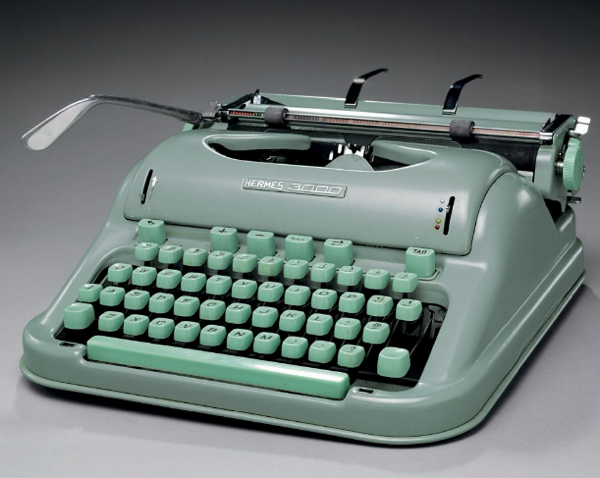
Jack Kerouac's typewriter
Jack Kerouac’s typewriter

1. A way to write things down

Whether it’s using a word processor, notebook with (many!) pens and (sharpened!) pencils, or a typewriter, the point of writing is to… umm… write things down. So you need a way to do this.

2. Ample light

Take care of your eyes and your sanity by writing in a well-lit location.

3. An inspirational statement posted somewhere you can see
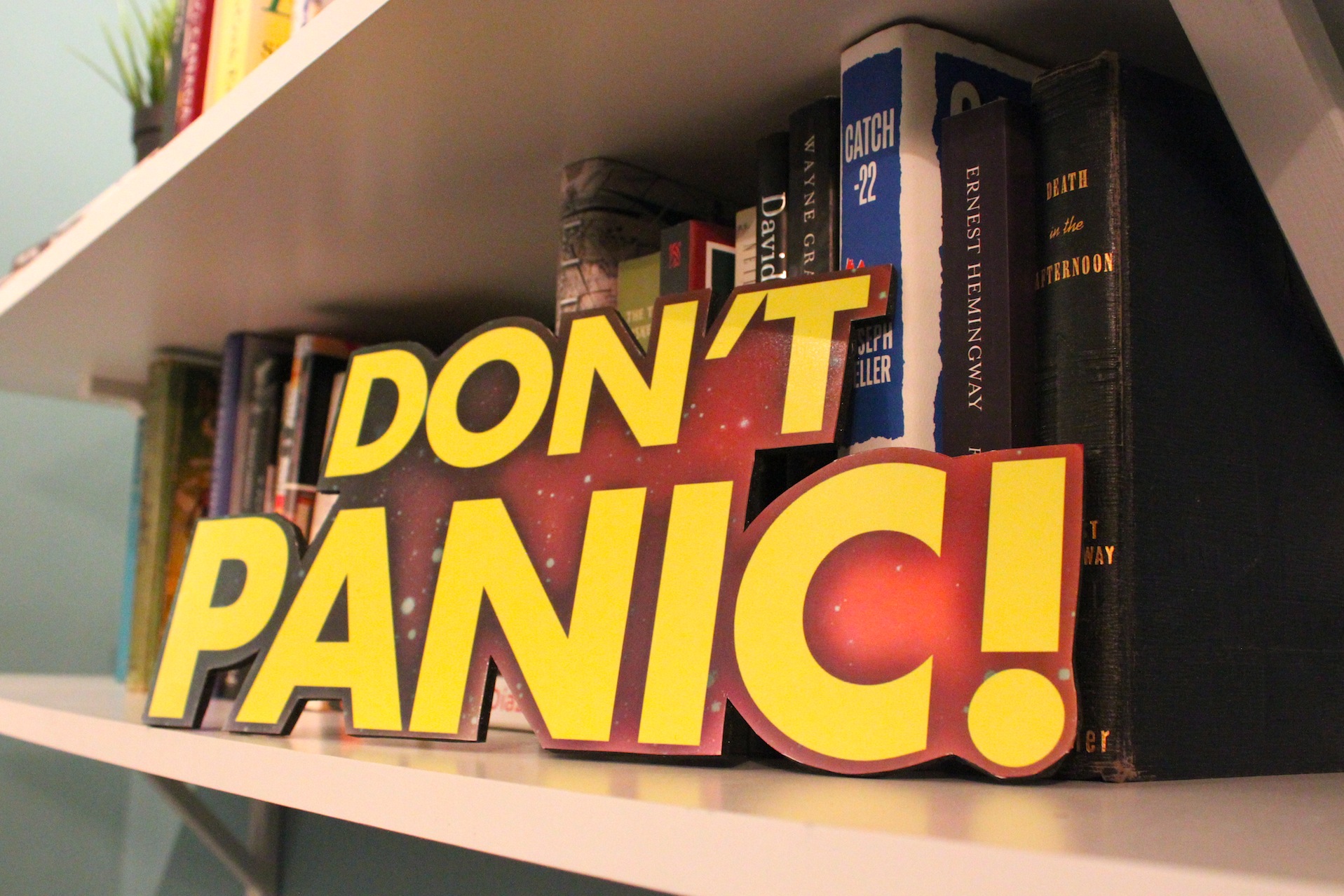
Don't panic - on my office bookshelf.

“Don’t panic!” – on my office bookshelf.

Here’s mine. Those of you who have read Hitchhiker’s Guide to the Galaxy will recognize the reference, but this particular sign has more meaning. I took this from the independent bookstore I worked at… on the last day it was open before it closed and we all got laid off. It’s too bad that the internet gobbled up the majority of inksplAt, my former blog, because it held a lot of the memories of my (wonderful, precious, special, amazing) time as a bookseller. Excuse me for a moment as I go sob in to my pillow…

4. A collection of writing prompts

Don’t let “writer’s block” be an excuse. Forestall it by finding a site with writing prompts (Poets & Writers – The Time is Now, Writing Prompts That Don’t Suck, etc.). Or create your own writing prompts. Write out a bunch of scenarios like: “and then a zombie walked in” or “he was craving Kool-Aid in a way he hadn’t since the day of the” or “and then he died.” The point of this exercise is not to necessarily write something that makes sense, but rather to just get you writing about anything until you can re-focus on your original storyline.

5. A bottle of water

I’m willing to bet you don’t drink enough. Water is essential for life, including optimal brain function. Plus it will make you feel fuller to cut down on the inevitable snacking.

6. Food made of food

As tempting as it is to fuel your writing binges with absolute junk, keep food on hand that has actual nutritional value.

7. Music (or silence)

If you are the type of writer who requires a soundtrack, make sure your playlist is ready to roll and your music device is fully charged. Personally, I write better in silence, but I do like to have a peppy song or two on hand to cheer me up if I’m having a rough writing day. If I need to switch it up, I like the Songza playlist “Conversation Pieces” for some weird mood music.

8. A clock with an alarm

Useful for a number of reasons including writing challenges (1k30min anyone?) and reminders to eat, shower, sleep, and just get up for a bit.

9. Proper posture

Future you will be thankful if current you can take five minutes to read this wikiHow article about how to sit at a computer (it has pictures!).

10. A good book

For inspiration, writing prompts, a brain break, or the comfort of nesting in a space, a good book should be a constant writing companion.

Did I miss anything that is essential in your toolkit? Let me know!

S.E. Lund

How to win Olympic gold in literature… metaphorically.

Did you watch the 2014 Winter Olympic Games in Sochi? I’m a big fan of the Olympics overall, but the Winter Games holds a special place in my heart because, well, I’m Canadian, and Canadians are good with winter. Also, there are so many weird and impressive sports in the Winter Games that I don’t get to see in the three intervening years (I mean ski cross? Snowboard slopestyle? This shit is crazy). I bring this up not to brag about Canada’s hockey and curling and moguls dominance – because that would be rude… and I’d hate to upset the stereotype of the mild-mannered, polite, and dull Canadian – but instead to talk about inspiration and goal setting.

It’s amazing to see ordinary people push themselves to their physical and mental limits to be the best in the world. It makes me feel hopeful. It makes me feel patriotic. It makes me feel inspired. But most of all, it makes me feel lazy. These athletes are working every day for years to be their best, and then testing their best against their peers. They work with coaches and trainers and teammates to make almost imperceptible changes and tiny improvements to their process/program/form/mental strength. They set challenging goals and allow themselves no excuses. So let’s do the same.

If you’ve ever worked in a corporate environment, you’ll be familiar with this process. Your ability to make and achieve professional goals is likely what determines if you receive a raise. Goal setting in your personal life is way more fun. My favourite goal setting resource actually comes from lululemon. Allow me to liberally copy-paste from their corporate blog right now:

break it down
Break your big goal down into multiple smaller goals. For example: if your goal is to do a handstand without the wall, set a goal that you can achieve in a shorter amount of time that will help you get there, such as “I will practice kicking up into handstand 20 times a week for a month by June 2011.”

write it in present tense
Write your goals in the present tense, as though they already happened. This gets your mind used to thinking that your dreams don’t have to be dreams; they can be reality.
Examples:
Asavakrasana is part of my yoga practice by November 2013.
I do a handstand without the wall and can hold it for 2 minutes by August 2012.

make it measureable
Can you measure your goal? If you can’t measure it, it’s not a goal. This can be a challenging part of goal-setting, but there is a way to write each of your biggest, baddest goals so that they are measurable in some way.

use affirmative language
Say what you will do, not what you won’t do. This will focus your energy on the desired outcome rather than the actions or behaviours that must stop.
Example: “I practice sidecrow” instead of “I stop avoiding sidecrow.”

be specific
Make your goals as specific and concise as possible. Keep it under 15 words, with no justification required. You can always change your mind!

by when
Attach a date to your goal. State the month in addition to the year. Dates keep you accountable. Don’t over-think things too much – just pick a date.

and now, your turn!
Here is a goal sheet for you to write in your 1, 5, and 10-year goals. At the top, write what your age and life will be like in 10 years.”

Perhaps I’ll post mine to stay accountable. It will not include the word “sidecrow.”

S.E. Lund

Just one more chapter…

You know that moment when “just one more chapter” becomes three hours later? It’s a truly precious moment, because it means you have been caught up in a story so compelling that it causes you to forget that alarm clocks and day jobs and flannel pajamas are the reality. You’ve obtained a new reality inside a character’s head, and it so outshines your own that you don’t even remember that time is passing.

What magic.  What sleep-deprived magic.

I love this experience, but you know who hates it? Future me. Future me with her office hours and responsibilities and decision not to be a coffee drinker. Future me is super resentful of “just one more chapter.” But she’ll have to suck it up. Story trumps sleep every time.

S.E. Lund

Unplugged.

A Facebook friend of mine (our relationship used to be face-to-face but now exists purely through the evil genius of Mark Zuckerberg) is also a hobby writer. He suffers, like I do, from follow-through issues stemming from habitual procrastination and a willingness to be distracted. I figure he’s talented. Years ago he promised that I could read something of his and shortly after our friendship dissolved… perhaps the pressure of my possibly judgemental review of whatever he was planning to let me read contributed to that. But I’m getting off topic. The point is he’s funny and creative and one of the rare people whose Facebook statuses are very frequent and completely personal, but somehow entertaining and engaging.

(To me, the worst Facebook offenders aren’t the vapid daily selfie posters, or the people incapable of spelling any words correctly, or even those glorious few who have uncomfortably personal conversations and arguments out there for the world to see – my dark side finds these last examples a certain kind of wonderful. What I can’t stand on social media is people being BORING: “Just got a grilled cheese. Yum!” “Ugh. More snow.” “Watching hockey with the fam. #blessed #goteam #hashtagsonfacebook.”)

This friend’s ability to post about his unextraordinary life is a friggin’ miracle. I look forward to reading what he has to say in three sentence tidbits, and I’d love to be able to read something longer. Last week he took a break from social media and the internet as a whole. My Facebook feed suffered, but his writing flourished. In his words “An entire week offline. I haven’t thought this clearly and undistractedly (not a word) since the 90s […] this is the key to being able to write. Being unplugged for relatively extended periods.”

I’m trying to decide if I agree with this statement. For the first two weeks of NaNoWriMo, I turned off the internet while I was writing. I had a rule that I could only go online once an hour for fifteen minutes, or every thousand words, whichever came first. It worked wonders, forcing me to put (virtual) words on the (digital) page because there was nothing else to do. However, about halfway through the month, once the daily writing had started to be habit and I didn’t have to be as vigilant about avoiding distractions, the tools that the wondrous internet provided were essential. I became a devotee to the @NaNoWordSprints Twitter account, which had me competing for word counts against myself and others while throwing in optional challenges like using the word sloth or writing a birthday party scene. My personal beast to slay was the #1k30min. If completing NaNoWriMo was my primary goal, completely a #1k30min was a very close second. I managed it with a few days to go while writing a scene about a shark attack. No kidding.

I’ll say that if you’re stuck, uninspired, lazy, or procrastinating – definitely unplug from everything. Go out somewhere. Sit in a quiet space with a pen and paper and watch the world. Then write stuff down. For me, if inspiration comes from the physical world, motivation can come from the digital one. If you must be plugged in, find online outlets that will push you to write – communities, writing challenges, blogging.

(Psst: My Facebook friend doesn’t know I’ve posted about him, but I guess that’s the risk you take when you say anything online).

Self-indulgent crap: Or, how not to be Dawson Leery.

Netflix has the entire series of Dawson’s Creek available currently, and I’m not ashamed to say that I watched it all. I actually started it during NaNoWriMo on the second day of my flu, when the Dawson-Joey-Pacey love triangle was the most complicated thing my sickly neurons could process.

Aside from reminding me that Joshua Jackson’s Pacey is really the star of the show (sorry James Van Der Beek… Dawson is just incredibly unlikable for the first couple seasons, and by the time he grows up, we viewers can’t ever forget his whiny, wide-eyed childishness), Dawson’s Creek teaches budding creative types that their lives are super interesting – as a primetime soap opera. If you’re unfamiliar with the show, allow me to say *SPOILER ALERT* now, and you can decide to skip ahead a couple of paragraphs if you like.

Dawson Leery, naïve wannabe film director, makes a film in the second season to try to imbue his (first? second?) breakup with Joey with meaning. In the final season, he looks back on this attempt and calls it, if I can paraphrase, a self-indulgent piece of crap and waste of money. Then for some reason (mostly because people keep telling him he used to have “heart”) he does it again, sells it as a T.V. show that is exactly the same as Dawson’s Creek – because meta – and it leads to fame and fortune since teenagers acting out tiresome melodramas and deciding over years whether or not to have sex with one another has the “heart” everyone’s been looking for.

Maybe the average person’s life is interesting enough that others will enjoy experiencing it as second-hand fiction. But personally? If I can’t write an amazing story about my first year of high school, then I won’t be able to write an amazing story about “Jamie”’s first year at my high school either (She’s not me! Really! Look! She’s a red-head!).

I’m not saying that characters, settings, and themes need to be completely original to a writer (as we know, there’s nothing new in storytelling). Of course we’re going to pull from our own experiences, relationships, and personal feelings.

I am saying that if your story is simply your clone acting out the exact situations you went through, but it wouldn’t stand up as literary non-fiction, it’s probably self-indulgent crap. It’s fantasy mixed with nostalgia, and it may very well sell as a primetime soap opera to the CW, but it won’t help you grow as a writer.

A caveat or two to my argument: Maybe your story is interesting enough to stand on its own as literary non-fiction, but you want to frame it as fiction for some reason. That’s cool. More power to you. Maybe your purpose is not to grow as a writer necessarily, but to understand yourself as a person. I’m sure exploring yourself as a fictional character could have some psychological merit.

When I’m tempted to write a protagonist that is a not-too-veiled version of me, instead I write a fringe character who is definitely me. For example, I’m writing a young adult short story right now and I began molding “Aly” into a glorified fourteen year old me. So I introduced her parents. I tried to imagine what I would be like at forty, with a teenage daughter, and in the world of the story. This exercise makes me develop a creative version of myself (instead of a version blurred by wistfulness), and forces me to make my actual protagonist distinct from the “me” in the story. Much more interesting.